Closed-loop farming
Larvae feed on upcycled produce from regional organic farms, eliminating landfill waste and returning compost to the soil.
Ethics & impact
We believe pet wellness should never come at the expense of other animals or the natural resources we all share. Our ethically-sourced, non-GMO BSFL supply chain is developed to fulfill a virtuous cycle—rescuing nutrients, elevating animal vitality, and returning value to soils, science, and community partners from larvae to dairy herds, aquatic turtles, and every companion animal in between.
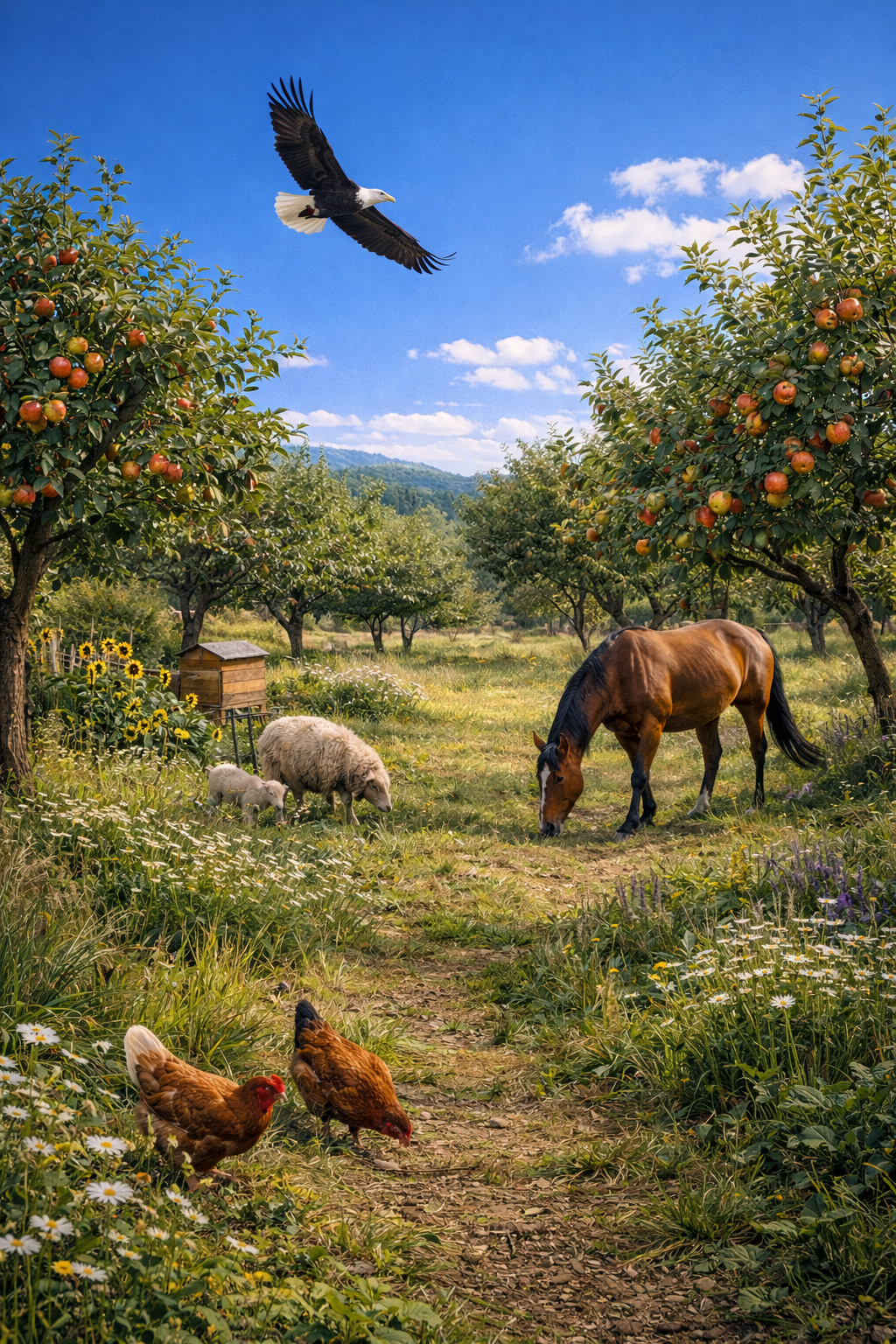
Each pillar protects a stage of the virtuous cycle so every formulation we ship reinforces the next: sourcing, nutrition, stewardship, and reinvestment.
Larvae feed on upcycled produce from regional organic farms, eliminating landfill waste and returning compost to the soil.
We prioritize low-stress rearing conditions and rapid, humane harvesting methods in accordance with entomology standards.
Solar arrays and heat recapture systems power our operations, reclaiming 42% more energy than comparable poultry-based foods require.
Every batch ships with QR-coded traceability to the farms, botanicals, and third-party labs powering each formula.
Our goat, sheep, and cattle blends use copper-safe mineral ratios and resource-savvy lipid profiles vetted by large-animal veterinarians.
Organic waste is diverted from landfills and converted into nutrient inputs for pet nutrition.
BSFL rearing is managed without routine antibiotics or chemical pesticides.
Our production model is designed to use substantially less water than conventional poultry-protein pathways.
Farm teams and animal nutrition staff are supported with livable wages and ongoing professional development.
Ingredients are ethically sourced and processed for turtle, ruminant, and companion animal formulations.
Dairy herd programs are associated with lower purchased feed demand in participating operations.
NACIA is a national coalition that advances the insect agriculture sector through policy engagement, education, and industry collaboration, helping build standards and advocacy for responsible insect-based production.
VISIT NACIA.ORG
The Frass Institute develops and shares independent, science-based frass research so growers, agronomists, and researchers can apply frass with confidence for soil health, productivity, and resilient crop systems.
VISIT THEFRASSINSTITUTE.ORGWe screen for pathogens, heavy metals, and nutrient variance at harvest, post-processing, and packaging.
Integrative veterinarians audit every formula for species safety, life-stage adequacy, and therapeutic benefits.
Our supply chain platform flags anomalies in ingredient sourcing for rapid response.
Dairy and small ruminant partners validate copper tolerances, residue-free milk, and pasture health outcomes each quarter.
We donate BSFL meal to rescue partners to stabilize the health of undernourished animals entering care.
Wild bird and chicken lines are designed to support local ecosystems with pollinator-friendly botanicals.
We collaborate with dairy cooperatives and aquatic rescue centers to donate ethically-sourced, non-GMO rumen and shell support formulas.
Monthly webinars empower caregivers to recognize nutrition-linked health issues early, reducing vet stress.
BSFL science integrated into ethics
Our formulations are grounded in peer-reviewed studies and internal trials assessing how ethically-sourced, non-GMO BSFL proteins, lipids, and fibers extend health spans across species. Explore the highlights, citations, and how we translate evidence into everyday nutrition for dogs, cats, ruminant herds, turtles, and beyond.
Whitepaper publication is currently in progress. Health span analytics are refreshed regularly using multi-species cohort data.

BSFL is naturally rich in chitin and lauric acid, which act as prebiotic substrates and antimicrobial agents. Studies in dogs and cats demonstrate improved stool quality scores, enhanced villi height in the small intestine, and increases in beneficial bacteria such as Lactobacillus and Bifidobacterium within 2-4 weeks of diet inclusion.
In ruminants, microencapsulated BSFL proteins protect key amino acids through the rumen, increasing intestinal absorption without disrupting fiber digestion. Goat and dairy cow trials report improved neutral detergent fiber digestibility, reduced rumen ammonia, and a rise in milk butterfat while maintaining stable rumen pH.
BSFL lipids are high in medium-chain fatty acids, particularly lauric acid, which exhibits antiviral and antibacterial properties. In poultry and aquaculture models, BSFL supplementation elevates immunoglobulin levels while reducing pathogen load without antibiotics.
Layer hens fed BSFL meal displayed elevated serum IgA and IgG levels alongside lower salmonella counts.
Tilapia trials show decreased TNF-α expression and improved survival under pathogen challenge when BSFL replaces fishmeal.
In dogs, lauric acid reduces overgrowth of Clostridium perfringens while maintaining beneficial bifidobacteria.
Goat kids supplemented with BSFL lipids exhibited higher IgA secretion and lowered fecal oocyst counts compared with traditional coccidiostats.
A healthy gut and balanced immune system underpin longer health spans. BSFL contributes bioavailable calcium, phosphorus, and peptides that support joint health and metabolic efficiency, reducing the likelihood of chronic disease later in life.
White Eagle Nutrition is collaborating with the Kansas State University Insect Farming Initiative, Symton BSF, and Entovations on pathogen-focused research evaluating the ability of black soldier fly larvae to biodigest poultry and other animal byproducts while assessing what happens to pathogen load, pathogen survivability, and microbial signatures through the larval digestion and frass production process. This research is designed to fill an important gap in the current literature: while black soldier fly larvae are widely studied for organic waste conversion, animal feed, and manure management, there is still limited applied research on their role in pathogen remediation, especially in disease-relevant animal tissue and contaminated agricultural waste streams. The project will help determine whether BSFL systems can become a practical, scalable, and sustainable tool for biosecure waste management, emergency disease response, and circular agriculture, while also generating data on the safety and biological profile of the resulting larvae and frass.
Research partnerships and study updates are published as collaborative milestones are completed.


Whether you’re a retailer, veterinary clinic, or sanctuary, we tailor programs that reward sustainability, ethical sourcing, and animal care.